Before You Give: The 60-Second Charity Check
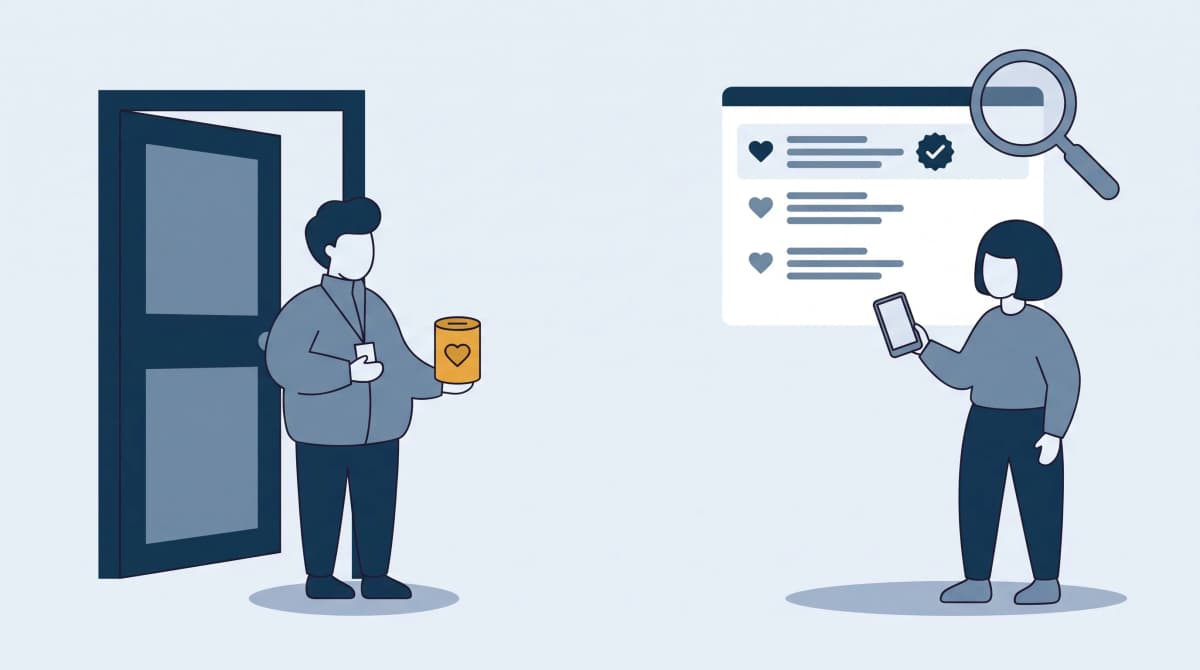
Someone's at your door with a laminated ID and a donation tin. Or on the phone, warm and well-spoken, raising money for flood relief. Or in your feed, with photos that break your heart.
Australians are among the most generous givers in the world — and scammers know it. Fake charities surge after every flood, fire and cyclone, and around every major appeal season, precisely because that's when your guard is down and your heart is open.
The fix isn't to stop giving. It's to spend 60 seconds checking first.
Why fake charities work
A charity scam doesn't feel like a scam. There's no threat, no "your account is suspended", no pressure to log in anywhere. There's just a good cause and a person asking — and saying no to a good cause feels wrong.
Scammers exploit exactly three things:
- The moment — disasters and appeal seasons, when giving is urgent and checking feels petty.
- The name — fake charities use names one squint away from real ones, so they borrow trust they never earned.
- The payment — cash, gift cards or bank transfer to a personal account, so the money is unrecoverable.
The third one is worth memorising now: no legitimate charity collects donations in gift cards or cryptocurrency. If that's the ask, the conversation is over.
The 60-second check
Every real charity in Australia is registered with the ACNC — the Australian Charities and Not-for-profits Commission — and the register is public. Checking it used to mean navigating a government database. Now it works like this:
- Take the charity's name (from the collector's ID, the caller, the website, the ad).
- Paste it — or exactly what they said — into the checker at askarthur.au. Arthur recognises a charity ask and checks the register automatically.
- Read the verdict.
Arthur checks the name against all 66,484 registered Australian charities, refreshed daily from the official register.
And here's the part a plain register search can't do: it catches the lookalikes. Search the ACNC register for "Astralian Red Cross" — one letter off — and you get "no results", which tells you almost nothing. Ask Arthur flags the same name as high risk: it recognises a deliberate near-miss of a real charity's name and points you to the real one.
That distinction matters, because "no results" feels like an error. "This looks like an impersonation of the Australian Red Cross" feels like what it is: a warning.
Checking is not an insult to the person collecting. Legitimate collectors expect it — many will show you their charity's ABN unprompted. Anyone who gets pushy when you say "I'll just check the register first" has answered your question for you.
The pressure test
Whatever the checker says, run the situation past these red flags:
- They need the money right now — real charities accept donations tomorrow too.
- Cash, gift cards, crypto or a transfer to a personal account — walk away, every time.
- They came to you with an unsolicited call and want your card details on the spot — hang up, check the charity, and donate through its official website if it's real.
- They know nothing about the charity beyond the script — ask what the charity actually does. Collectors for real charities can tell you.
Give with confidence
Australians lost $2.18 billion to scams in 2025 (ACCC Targeting Scams report) — and charity scams are among the cruellest, because they weaponise generosity and starve real causes of the money you meant to give.
So don't give less. Check first, then give more confidently:
Take the name. Check it at askarthur.au. Then give.
Free, no signup, all 66,484 registered Australian charities — and the fakes pretending to be them.
Related posts


Think you've received a scam?
Check it instantly — free, private, no signup.
Check nowStay ahead of scams
Weekly alerts delivered to your inbox every Monday.